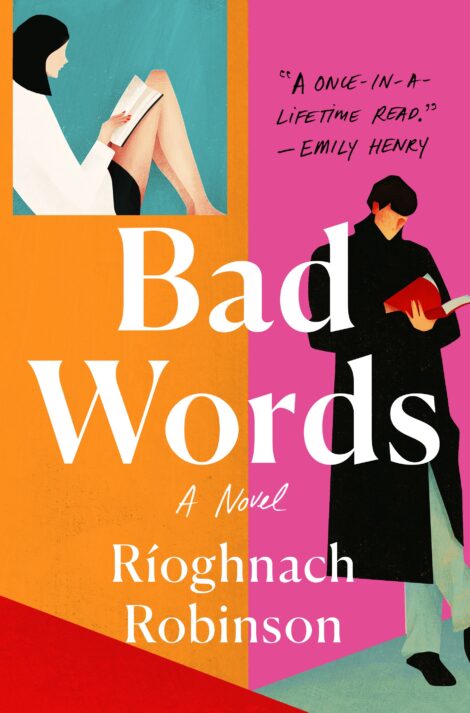
BAD WORDS
The #1 Indie Next Pick for October!
A sharp and deeply felt debut about the connections that both inspire and undo us.
Parker Navarro’s debut novel was meant to define his career—until critic Selina Chan’s blistering review made it the flop of the decade. Four years later, his new book is his shot at redemption; for Selina, reviewing him again is a professional risk she can’t refuse. When her second takedown ignites a viral feud, both their fortunes shift overnight. But as the literary world feeds on their public sparring,
The #1 Indie Next Pick for October!
A sharp and deeply felt debut about the connections that both inspire and undo us.
Parker Navarro’s debut novel was meant to define his career—until critic Selina Chan’s blistering review made it the flop of the decade. Four years later, his new book is his shot at redemption; for Selina, reviewing him again is a professional risk she can’t refuse. When her second takedown ignites a viral feud, both their fortunes shift overnight. But as the literary world feeds on their public sparring, a quieter dialogue begins—one that challenges everything they thought they knew about success, sincerity, and each other.
Both incisive and tender, Bad Words lays bare the costs of creation—the pull between ambition and integrity, the vulnerability of being seen, and the unexpected closeness that can grow in the space between critique and care.
- St. Martin's Press
- Hardcover
- October 2026
- 400 Pages
- 9781250431295
Buy the Book
$30.00

About Ríoghnach Robinson
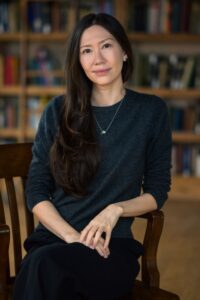 Ríoghnach (pronounced ree-uh-nock) Robinson is the author of six YA novels published under the pen name Riley Redgate, most recently Come Home to My Heart. Her books have been published on four continents, optioned for film and TV, and named to best-of-the-year lists by the American Library Association, Kirkus Reviews, and the New York Public Library.
She is also the writer of the WEBTOON Originals series Angel of Death and has written for The Onion. Bad Words is her adult debut.
Praise
“I was two percent into Bad Words when I realized I was reading something special, the rare kind of book that not only treads new, fresh territory but does so in a way that feels startlingly inevitable. The kind of book I can’t believe doesn’t already exist, because it is just so right, so the thing I’ve been waiting for. It’s also a book that could only ever have been written by Ríoghnach Robinson, whose clear, clever voice and incisive social commentary elevate the book’s punchy premise and irresistible will-they-won’t-they romance to a once-in-a-lifetime read about truth, art, vulnerability and all the sticky places they intersect. Bad Words left me buzzing.”—Emily Henry, #1 New York Times bestselling author of Great Big Beautiful Life
“With Bad Words, Ríoghnach Robinson has written something truly spectacular—a precisely crafted, genre-redefining romance that sets a thrilling new standard for greatness. Easily one of my favorites of the year, if not the decade.”—Carley Fortune, #1 New York Times bestselling author of Our Perfect Storm
“A rom-com with plenty of heft, in the way it nails the effects of social media on how we talk, read, and even think; in its prescient landscape of bookstores’ and City’s fight to survive; in how Selina and Parker each struggle to fit into their very different families; and in its heady, romantic toppling of its protagonists’ expectations.”—Booklist (starred)
“A smart, thought-provoking adult debut that’s perfect for bibliophiles. [Robinson] toys with a slow-burn romance, but the love story ultimately takes a back seat to a conversation about craft, ambition, and what it means to truly love and stand by what you create. A unique and complex commentary about being perceived.”—Kirkus
“Meet your new favorite romance writer: This buzzy new romance…also asks poignant questions about art and ambition, probing the motivations behind why artists create.”—Harper’s Bazaar
“This smart, funny gem of a novel is a valentine to books and the words within them. Robinson’s spot-on descriptions of the publishing industry are catnip for bibliophiles, and the enemies-to-lovers storyline feels fresh and completely genuine. But it is Robinson’s deep love of the written word as the path to understanding and connecting with others that shines through every page.”—Shelf Awareness
“Bad Words doesn’t fall neatly into the rom-com genre, and that’s what I love about it. Robinson manages to tickle my love for a literary, intellectual read that asks big questions about a society or system, with lovely, lively prose—all while still being laugh-out-loud hilarious.”—PureWow
“I devoured this book in two days with a smile dancing on my face. Have I ever been so entertained? Ríoghnach Robinson is a writer with serious chops showing us what is possible within the bounds of romance. Bad Words is an absolute delight.”—Holly Brickley, bestselling author of Deep Cuts
“Attraction between enemies is one thing, attraction between enemies in the petty panopticon of online literary skirmishes is another entirely. Full of blistering barbs, incisive takedowns and searing gazes, Bad Words is smart, horny, and propulsive. A sapiosexual’s wet dream.”—Mary H.K. Choi, New York Times bestselling author of Pool House
“Bad Words is a triumph for anyone who cares about art and all that goes into the creation and consumption of it. It’s virtuosically told, utterly fresh, and chock full of sharp-as-hell observations that make the romance even more delicious. I was captivated from cover to cover.”—Tarah DeWitt, USA Today bestselling author of Lost and Found
“Emotional, poignant, and deeply romantic, Bad Words is impossible to put down. Brimming with decadent yearning, sizzling tension, and honest vulnerability, Parker and Selina’s story will stay with me long into the future. I’m madly in love with this book.”—Jordan Stephanie Gray, New York Times bestselling author of Bitten and The Wicked Sea
“I loved this book. The freshest literary romance I’ve read in ages, full of gorgeous prose and agonizing chemistry, culminating in a delicious, torturous slow burn that had me on the edge of my seat. A reminder that the thin between love and hate is a (literal) matter of opinion and for the people who have to write to understand where they went wrong. This story really touched me and its characters will stay with me for a long time. A beautifully written, emotionally poignant romance.”—Iman Hariri-Kia, author of Female Fantasy
“Bad Words is truly a one-of-a-kind love story. Warm and witty, razor sharp and painstakingly meticulous in its observations, Robinson has crafted a novel that manages to combine a page-turning plot with undeniable literary prowess. The portrayal of her characters is so deeply and unflinchingly intimate, by the end of the book, I felt as though I would know them if I met them in the street. Truly captivating.”—Lindsey Kelk, Sunday Times bestselling author of Love Story
“Smart, deep, and heartfelt. I adored it!”—Gillian McAllister, New York Times bestselling author of Wrong Place, Wrong Time
“I don’t even know where to begin—I’m genuinely writing this through tears. I have thought of little else since starting the book; I feel it’s reminded me of why I read, in a way I didn’t even realize I needed. I simply passionately loved it. It’s searingly insightful, captivatingly romantic, and one of the best love stories I have ever read.”—Beth O’Leary, international bestselling author of The Flatshare and Swept Away
“Robinson’s wit cuts deep, her characters burn bright, and every page crackles with tension. A dazzling, razor-edged love story.”—Louise O’Neill, international bestselling author of Idol and Asking For It
“Bad Words is Deep Cuts for the publishing industry. A really great romance and an even better book about books. I loved it.”—Bobby Palmer, author of Isaac and the Egg
“Full of wit, warmth, and deliciously sharp observations on books and the people who love them, Bad Words is a love story about two people who could not be worse—or better—for each other. I didn’t want it to end.”—Stacey Yu, author of Kitten
Discussion Questions
- Consider Selina and Parker’s relationship over the course of the novel. What ultimately brought them together? Given their related industries, do you think they’d have found their way to each other eventually?
- Parker is part of a large, boisterous family. What is his role within the dynamics of his family, and how has this affected the way he communicates and presents himself? What are the benefits and pitfalls of his desire to be liked and to avoid conflict? In what ways does this inform his writing?
- Selina keeps a small circle of trusted friends. Why do you believe that is? What is it about Parker that allows her to trust him despite their history?
- While Selina’s motivation is to prove her parents wrong, Parker’s motivation has been to provide for his family and make them proud. What are some similarities that Parker and Selina have despite the differences in their upbringings?
- Selina cares about the work that is put out into the world; that’s why she’s a critic. It’s said that book reviews are for the readers, but is there a line between criticism and bullying when reviewing books? If there is, where do you think that line falls, and what entices people to cross it?
- With the rise of social media, public discourse has grown more accessible, leading to a rise in a culture of takedowns and social cancellations. Within Bad Words we see these conversations taking place in both public spaces and the seemingly private forums that are part of them. Do you believe these spaces allow for productive discussion? If not, why do you think so many engage with them?
- How does Parker’s experience as a third-generation Filipino American and Selina’s as a first-generation Chinese American impact their experiences as creatives, as friends, and as individuals throughout the story?
- Should books be considered literary masterpieces for them to be worth reading? What makes a book worth reading for you personally?
- Parker and Selina carefully craft personas for themselves in their writing, in their behavior online, in their workplaces, and in real life. How do these limited personas compare to “the real thing,” to the characters as whole people?
- Even when Parker and Selina still despise each other, they feel hints of envy. Parker envies Selina’s clarity and conviction, while Selina envies Parker’s likability and relative financial security. How do these feelings of envy first reinforce, then conflict with, their feelings of dislike?
- Parker and Selina’s feud is staked on publicity, but it’s also staked on the idea of changing people’s minds about their work and their reputations. Has your mind ever been changed by something you saw online, or have you changed somebody else’s mind? Why is it difficult for people to change their minds, both online and offline?
- Even though Selina’s reviews are painful to Parker, he finds something true in them, something that shows real understanding of him and his work. Is there something frightening about being understood? How does the idea of good faith play into Parker’s relationship with Selina’s reviews?
- Throughout the book, Selina is forced to deal with how the role of the critic has transformed. Do you think professional critics are important? How are critics connected to, and disconnected from, artists?
- Are you a Selina or a Parker? Why?