
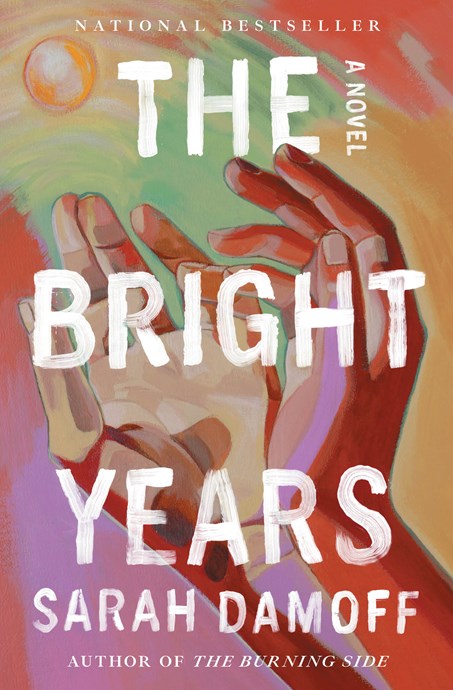
THE BRIGHT YEARS
One family. Four generations. A secret son. A devastating addiction.
Ryan and Lillian Bright are deeply in love, recently married, and now parents to a baby girl, Georgette. But Lillian has a son she hasn’t told Ryan about, and Ryan has an alcohol addiction he hasn’t told Lillian about, so Georgette comes of age watching their marriage rise and fall.
When a shocking blow scatters their fragile trio, Georgette tries to distance herself from reminders of her parents. Years later, Lillian’s son comes searching for his birth family, so Georgette must return to her roots, unearth her family’s history,
One family. Four generations. A secret son. A devastating addiction.
Ryan and Lillian Bright are deeply in love, recently married, and now parents to a baby girl, Georgette. But Lillian has a son she hasn’t told Ryan about, and Ryan has an alcohol addiction he hasn’t told Lillian about, so Georgette comes of age watching their marriage rise and fall.
When a shocking blow scatters their fragile trio, Georgette tries to distance herself from reminders of her parents. Years later, Lillian’s son comes searching for his birth family, so Georgette must return to her roots, unearth her family’s history, and decide whether she can open up to love for them—or herself—while there’s still time.
Told from three intimate points of view, The Bright Years is a tender, true-to-life debut that explores the impact of each generation in a family torn apart by tragedy but, over time, restored by the power of grace and love
- Simon & Schuster
- Paperback
- April 2026
- 288 Pages
- 9781668061459
Buy the Book
$18.00

About Sarah Damoff
 Sarah Damoff is the author of The Burning Side and The Bright Years, which was a USA TODAY bestseller. She lives with her husband and children in Texas, where she has been a social worker.
Praise
“Sarah Damoff’s debut novel, The Bright Years, carries the sensitivity and knowledge of her years of experience as a social worker…Damoff’s careful approach to depicting alcoholism, and her expressions of what it means to love (and be loved) amidst the wreckage of addiction, set this tender novel apart.”—Elle
“To attempt to tell a convincing love story at this late stage in the history of the novel is to set the bar ambitiously high, and yet Sarah Damoff somehow pulls it off twice in a single book, penning two thoroughly persuasive, interrelated relationship histories, each with appealing texture and depth…The Bright Years builds symphonically, polyphonically, reaching emotional crescendos and gliding into perfectly calibrated decrescendos that mimic the rhythms of real life.”—Lit Hub
“In Damoff’s heartfelt debut, which spans four generations, the impact of addiction is threaded tightly into a family’s story. The novel examines the joys and sorrows of Lillian Bright and addresses a timeless theme: how alcohol decides what to destroy and what to leave alone.”—People
“Unforgettable characters and life-affirming moments shine in this powerful debut novel.”—Woman’s World
“The Bright Years is more than just a good novel. It is so masterfully constructed and so sensitively, satisfyingly written that one finds it hard to believe it is a first novel. It contains all the realism of everyday life for millions of everyday people: passionate romance, betrayal, abandonment, survival and overcoming the odds. It’s a family saga filled with heart and hope, pain and joy, love and grief.”—Dallas Morning News
“The Bright Years is a dazzling, true-to-life depiction of adoration and damage, and the lovely ache of living as the pendulum swings between them.”—Shelf Awareness (starred review)
“Outstanding…through Damoff’s beautiful, at times almost poetic narrative, we see hope through the darkness, and how love—and forgiveness—can make us whole.”—BookReporter
“Tender and heartbreaking, but ultimately hopeful…will make the reader feel like they are actually living through it alongside the characters.”—Booklist (starred review)
“Damoff’s heartfelt debut focuses on the impact of alcohol addiction on a family over four generations…This family drama rings true.”—Publishers Weekly
“This novel sparkles in its sentences, its texture, its big heart—THE BRIGHT YEARS is a vivid, forthright, and gorgeously written story of love in its many iterations.” —CLAIRE LOMBARDO, New York Times bestselling author of The Most Fun We Ever Had and Same as it Ever Was
“THE BRIGHT YEARS is a moving portrait of inheritance and loss. A heart-breaker and heart-mender at once, this is a story that forces us to confront our vulnerabilities and secrets in order to find our strength and truth. A stunning debut!”—TAYARI JONES, New York Times bestselling author of An American Marriage
Discussion Questions
1. Why do you think Lillian withheld the reality that she had placed a baby for adoption from those closest to her? Do you think she was wrong to do so?
2. When Lillian miscarries, there is a passage (p. 41) where time is moving backward. Why do you think the author chose to do this here? Were there other instances in the book when the treatment of time stood out to you?
3. Lillian tells Jet that “love doesn’t always feel like we expect.” How does this come up in the parent-child relationships? How does it come up in the romantic relationships?
4. On page 66, Lillian thinks, “I hate him. But hate is anemic when love hangs around like turpentine in the upholstery.” And on page 97, Ryan begs Lillian to hate him. She replies that she does, but she also loves him. How does this complexity of heart follow them throughout the story?
5. On page 203, Jet thinks about how Elise’s love “is composed of practicalities.” How did Elise’s choices impact the generations after her? Why do you think grandmothers are so often a stabilizing force in a family?
6. Jet observes her dad and wonders, “What’s the difference between an excuse and a reason?” What do you think the answer to this question is?
7. Which relationship did you see as central in the book? Why?
8. How did the ending of the story impact you? In the classic sense, would you call this book a tragedy or comedy?