
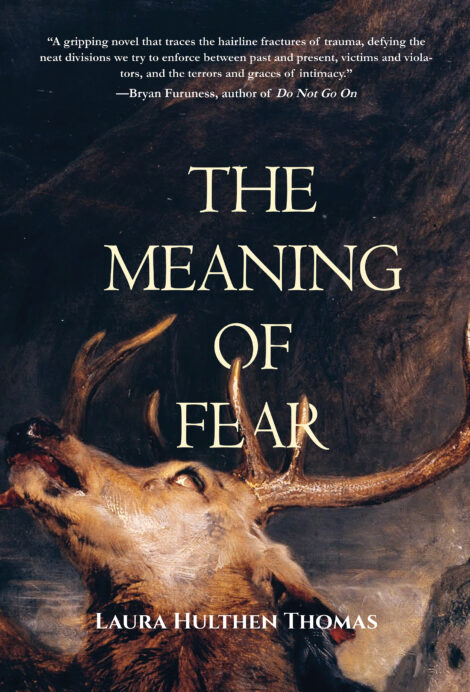
THE MEANING OF FEAR
Amid the turmoil of the 2008 recession that threatens her career, Lea Johnson, a behavioral researcher dedicated to curing post-traumatic stress disorder, is also struggling to save her marriage.
When her husband, Jay, is brutally attacked during an attempted robbery, Lea is shaken to realize that being an expert in fear doesn’t make her an expert in healing her own husband’s trauma.
Things take a dark turn when Jay confronts a young trespasser outside their home, only for the boy to be reported missing shortly after.
Lea begins to suspect that Jay is hiding something,
Amid the turmoil of the 2008 recession that threatens her career, Lea Johnson, a behavioral researcher dedicated to curing post-traumatic stress disorder, is also struggling to save her marriage.
When her husband, Jay, is brutally attacked during an attempted robbery, Lea is shaken to realize that being an expert in fear doesn’t make her an expert in healing her own husband’s trauma.
Things take a dark turn when Jay confronts a young trespasser outside their home, only for the boy to be reported missing shortly after.
Lea begins to suspect that Jay is hiding something, and as she feels a growing attraction to the sympathetic cop investigating the case, she’s torn between her loyalty to her husband and the urge to uncover the truth.
When an unexpected opportunity arises for Lea to confront her own childhood assailant, the lines between healing, revenge, and forgiveness blur.
In a battle with her past and her husband’s potential secrets, Lea must decide whether her affair will be the catalyst for healing or the final fracture in a marriage already on the brink.
- Regal House Publishing
- Paperback
- March 2026
- 284 Pages
- 9781646036783
Buy the Book
$20.95

About Laura Hulthen Thomas
Laura Hulthen Thomas’s deeply human, emotional storytelling explores blue and white collars, lovers and spouses, mothers and children, and the unique Michigan places that shape these relationships. Her novels, stories, and essays reveal the complexities of home, work, and the Midwestern landscape. Laura heads the undergraduate creative writing program at the University of Michigan’s Residential College. Her first book, STATES OF MOTION, was a finalist for a Foreword Reviews Indie Award.
Praise
“What do we do with the wounds that won’t heal? And what do those wounds do to us? The Meaning of Fear is a gripping novel that traces the hairline fractures of trauma through a small community in Michigan, defying the neat divisions we try to enforce between past and present, victims and violators, and the terrors and graces of intimacy. What drives Paul and Lea and everyone else in this suspenseful novel is a shared hope–and dread–of release.” —Bryan Furuness, author of Do Not Go On
“‘The culling of bucks, while not prohibited, was discouraged, ‘ Thomas writes in her beautifully rendered and deeply intelligent debut novel, while ‘Controlling the female segment of the population is critically necessary.’ And so the suburban cull begins. When forests become farms and farms become housing developments, wildness and violence, we’re reminded, remain. Thomas is a master of this landscape, and in her exploration of the place where fear drives her characters between the instinct for revenge and the longing for mercy and forgiveness. A great read.” —Susan Neville, award-winning author of The Town of Whispering Dolls
“What a bold, wise writer! I am in love with Laura Thomas’ luminous, empathetic worldview. She is a connoisseur of interiority and nuance. I was utterly enthralled by The Meaning of Fear, a remarkable feat of characterization. The narrative delves into the lasting effects of trauma and abuse, masterfully detailing how perceptions based on personal experience and bias sometimes lead to misunderstandings and misjudgments. The story highlights the ripple effect of all our choices and offers the reader a powerful picture of what it means to be human: the messiness and beauty and the enduring capacity for hope.” —Kelly Fordon, award-winning author of I Have the Answer
“As its title suggests, The Meaning of Fear explores through precisely drawn and utterly believable characters the many ways fear shapes us: through brutality, abuse, neglect, and betrayal. As a result of their past traumas, Lea and Rilke are complicated people, both victims and aggressors straining to find balance and happiness even as their thoughts and behaviors are inspired by past wounds. We walk a tightrope beside these characters, deciphering actual reality from one filtered through their trauma in a masterfully delivered novel of suspense. Will they betray in a learned and potent response to fear? Will they exact revenge on their abusers? Will they forgive and move forward? Thomas’s skill in drawing memorable parallels between past and present events, places, and conflicts results in an intricate and satisfying story that drives forward with clarity and ingenuity. This book is literally novel; you will never read another one like it.” —Dorene O’Brien, award-winning author of What It Might Feel Like to Hope
“This riveting, richly layered novel engages on multiple levels. It’s a searing exploration of the long reach of trauma, and of how it can limit our ability to trust or love. It’s an unsparing examination of how relationships can fall apart, or find promising ground. It’s also a moving exploration of how we can persist–and perhaps find reasons for hope–even under the most trying circumstances. And, finally, it’s a compelling mystery that will keep you guessing until the final pages. Both unflinching and compassionate, The Meaning of Fear is an unforgettable novel.” —Beth Castrodale, author of The Inhabitants
Discussion Questions
1. Despite her expertise in studying the fear response, Lea finds herself unable to cope with the lingering aftereffects of her husband’s recent trauma. Why do you think Lea fails to understand and sympathize with Jay’s complicated recovery?
2. How does the fact that the subdivision where Lea lives was built on land that used to be a part of the Rilke family’s farm influence Paul Rilke’s behavior towards the Johnson family and the search for the missing teen?
3. Lea’s unexpected re-connection with her childhood “frenemy”, Dinah, surfaces old anger at Dinah’s act of betrayal. Why do you think Lea is as drawn to this complicated friendship in adulthood as she was as a teen, especially when Dinah is still maddeningly condescending towards Lea?
4. Both Lea and Paul struggle with the legacy of trauma and the effects of complicated grief. While their pasts have made them very different from one another, do their reactions to the events in the novel reveal any similarities between them?
5. The novel explores characters who were drawn to jobs where a certain amount of moral ambiguity is a part of doing business, but who now find that they are losing their ability to justify the means to an end. How do Lea and Paul’s changing attitudes toward their professions play a role in confronting their fears and past traumas?
6. A local deer cull plays a central role in the novel, as does Dinah’s work as an animal rights activist. How are Dinah’s activism and the cull linked in the novel? What is the novel saying about the impact of human activity on the animal and natural world?