
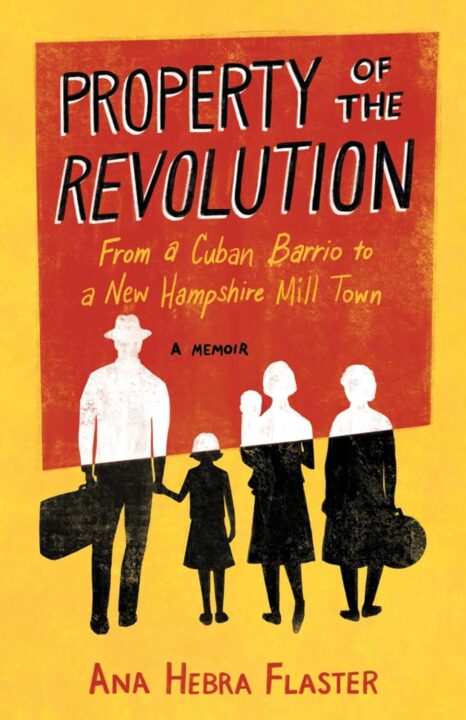
PROPERTY OF THE REVOLUTION
From a Cuban Barrio to a New Hampshire Mill Town
In this sweeping, historical, yet intimate memoir, the author details her family’s transformation from pro-Castro revolutionaries in a scrappy Havana barrio to refugees in a New Hampshire mill town—a timeless and timely tale of loss and reinvention.
Ana Hebra Flaster was six years old when her working-class family was kicked out of their Havana barrio for opposing communism. Once devoted revolutionaries themselves but disillusioned by the Castro government’s repressive tactics, they fled to the US. The permanent losses they suffered—of home, country, and loved ones, all within forty-eight hours—haunted her multigenerational family as they reclaimed their lives and freedom in 1967 New Hampshire.
In this sweeping, historical, yet intimate memoir, the author details her family’s transformation from pro-Castro revolutionaries in a scrappy Havana barrio to refugees in a New Hampshire mill town—a timeless and timely tale of loss and reinvention.
Ana Hebra Flaster was six years old when her working-class family was kicked out of their Havana barrio for opposing communism. Once devoted revolutionaries themselves but disillusioned by the Castro government’s repressive tactics, they fled to the US. The permanent losses they suffered—of home, country, and loved ones, all within forty-eight hours—haunted her multigenerational family as they reclaimed their lives and freedom in 1967 New Hampshire. There, they fed each other stories of their scrappy barrio—some of which Hebra Flaster has shared on All Things Considered—to resurrect their lost world and fortify themselves for a daunting task: building a new life in a foreign land.
Weaving pivotal events in Cuba–US history with her viejos’—elders’—stories of surviving political upheaval, impossible choices, and “refugeedom,” Property of the Revolutioncelebrates the indomitable spirit and wisdom of the women warriors who led the family out of Cuba, shaped its rebirth as Cuban Americans, and helped Ana grow up hopeful, future-facing—American. But what happens when deeply buried childhood memories resurface, demanding an adult’s reckoning?
Here’s how the fiercest love, the most stubborn will, and the power of family put nine new Americans back on their feet.
- She Writes Press
- Paperback
- April 2025
- 312 Pages
- 9781647428266
Buy the Book
$17.99

About Ana Hebra Flaster
Ana Hebra Flaster has written about Cuba and the Cuban American experience for national print and online media including The Washington Post, The Wall Street Journal, The New York Times, and the Boston Globe. Her commentaries and storytelling have aired on NPR and PBS’s Stories from the Stage. She loves watching birds, walking in the woods, and chatting with just about anyone. After almost forty years in the Boston area, she recently moved back to southern New Hampshire with her husband, Andy, and their Havenese pups, dog, Luna and Beny Moré.
Praise
“With heart and an acute sense of what it means to be displaced, Property of the Revolution explores the cost of leaving Cuba to come to America. This is a memoir filled with wisdom, history, joy, and the reverberating waves of grief. I wanted to sit with the viejos and all the love and chaos in their multi-generational home and hold on to Abuela and her stories forever.” —Marjan Kamali, author of The Lion Women of Tehran and The Stationery Shop
“Ana Hebra Flaster’s memoir beautifully represents the journey so many people take when they leave a country they love because there is no other choice. Property of the Revolution: From a Cuban Barrio to a New Hampshire Mill Town reminds us of what immigrants and refugees bring to our country – a commitment to family, a burning desire to contribute to a new community, and a unique cultural identity that makes the U.S. stronger and more vibrant.” —Jeff Thielman, President and CEO, International Institute of New England
“In her beautiful, big-hearted memoir Property of the Revolution, Ana Hebra Flaster intimately explores the psychology of choosing and adapting to exile. Everyone interested in getting past ideology to the inner lives and motivations of refugees should rush to buy this brave book. You won’t want it to end.” —Aran Shetterly, author of Morningside: The 1979 Greensboro Massacre and the Struggle for an American City’s Soul
“If you think Cubans in the diaspora have only looked to Miami to find their new homes, this book will take you on a very different Cuban journey: to New Hampshire. . . . A compelling and beautiful memoir, read it to gain a capacious view of what it means to be both Cuban and American and to understand the hurt and hope of those whose ideals of revolution were betrayed.”—Ruth Behar, author of Across So Many Seas
“Written with the vividness of a poet and the reflexivity of an auto-ethnographer . . . a classic story about displacement, resilience, and triumph, Property of the Revolution offers fresh perspectives and a deeper understanding of the intersectional meanings of home, country, and family.” —Richard Blanco, 2013 Presidential Inaugural Poet, author of The Prince of Los Cocuyos: A Miami Childhood.
Discussion Questions
1. Like most refugee families, Ana’s family can’t return home, and they depend on letters and phone calls to stay connected to loved ones who stayed behind. How does this forced and potentially permanent separation shape the family’s view of the past—and the future?
2. Mami decides early on that the revolution is turning into a worse dictatorship than Batista’s and that the family must flee. Abuela, Tía, and Tío wrestle with moral dilemmas before they arrive at the same conclusion. Tío Manolo’s family decides to wait things out and ends up enduring decades of hardship. If faced with an existential challenge, would you be more likely to decide and act quickly or to wait things out?
3. Later in life, Ana reluctantly accepts that she has been through significant trauma and must deal with the ramifications. How did the family’s new origin myth—about having “won” against Castro and not being victims—help and hurt Ana as she formed her new identity?
4. Ana and Abuela share a unique and powerful bond. The old and the very young in refugee and immigrant homes are often over- shadowed by the adults busy making all the decisions, working multiple jobs, and learning the new rules of the game. Could the bond between the “bookend” generations be an overlooked hallmark of the refugee and immigrant experience?
5. What if Abuela had stayed in Cuba, as she wanted, to care for Don Manuel? How did choosing her daughters over her father affect the family’s chance of success in the United States?
6. When she becomes a mother, Ana tries to follow Cuban tradition and it doesn’t work. How does becoming a mother change her perspective toward her culture?
7. In one of his last letters, Don Manuel urges his daughter and granddaughters to “stay together.” Do the sisters fulfill that wish, even though they move into separate homes later in life?