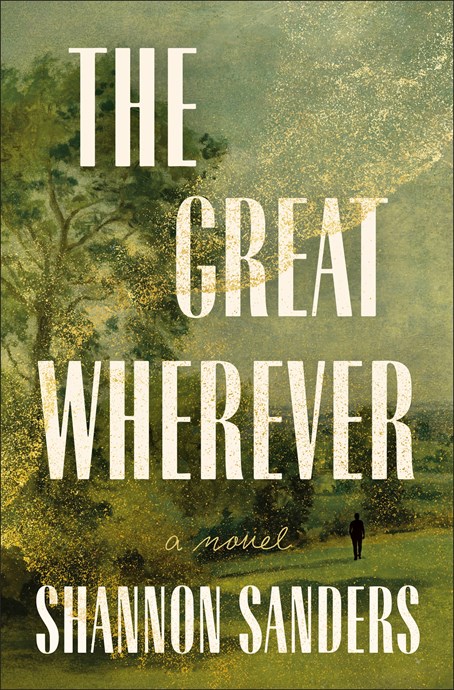
THE GREAT WHEREVER
BOOK OF THE MONTH PICK • Named a Most Anticipated book by NPR, People, Oprah Daily, Esquire, and more
The dead are relentless gossips, or at least these dead are. . .
At thirty-two, Aubrey Lamb is stumbling through adulthood. Underpaid and working multiple jobs in Washington, DC, she’s grieving the end of a serious relationship and the recent loss of her father. When Aubrey learns she has inherited his stake in a sizable Tennessee farm, she sees an opportunity to get out of the city—and to erase a mounting pile of debt.
Watching her arrival with great interest are four ghosts—Aubrey’s ancestors, who’ve staked their own claims to the farm and who never hesitate to pass judgment on the mistakes made by the living, be they romantic, financial, or sartorial. As Aubrey reconnects with her living family, another story unfolds in parallel: the history of the land, beginning with its purchase by Thomas, Aubrey’s great-grandfather and one of the first Black landowners in his community. Though Thomas hopes to give his children a homestead on which they could flourish, the land proves to be a burdensome inheritance. Over the years, it turns the Lambs against one another, culminating in a catastrophic tragedy that splinters the family and echoes through the decades.
Now, as the clock ticks on a potential sale of the farm, the ghosts fear expulsion from the home they’ve made, and Aubrey must weigh the hopes and burdens of her forebears with the very real needs of her future.
An expansive family saga told with a wry and distinctly modern voice, The Great Wherever is at once grand and intimate; it explores the ways we learn to define ourselves through and against our families, how we carry on after loss, and how the past lives on in all of us.
- Henry Holt & Co
- Hardcover
- July 2026
- 416 Pages
- 9781250421678
Buy the Book
$29.99

About Shannon Sanders
Shannon Sanders is the author of the linked short story collection Company, which won the 2024 Los Angeles Times Book Prizes’ Art Seidenbaum Award for First Fiction, was named one of the best books of 2023 by Publishers Weekly and Debutiful, and was shortlisted for the 2024 William Saroyan International Prize for Writing. Her short fiction has appeared in numerous publications, including One Story, The Sewanee Review, Virginia Quarterly Review, and Electric Literature, and has received a PEN/Robert J. Dau Short Story Prize for Emerging Writers. She lives in Silver Spring, Maryland, with her husband and three sons.
Praise
“Expectations were running high for Shannon Sanders’ first novel. . . . A playful and poignant intergenerational saga about a haunted farm in which ancestors watch over and critique the living for posterity and entertainment, The Great Wherever leaps over that bar….Inventive and new….I was hooked from the first sentence.”—NPR, 15 Most Anticipated Books of Summer
“This is a truly magnificent novel from a uniquely powerful voice. A bighearted triumph.”—Kirkus (starred review)
“A gripping multigenerational epic of land, home, and inheritance. . . . Sanders poses timely questions of ownership and ancestry, and she packs the novel with indelible imagery. . . .This resonates.”—Publishers Weekly (starred review)
“A gripping saga of Black legacy.”—People, Must-Read Books for Summer 2026
“A debut novel that is part family saga, part historical fiction, part ghost story, and entirely captivating. . . . Sanders expertly portrays familial relationships, imbuing her characters with pathos and humor as they grapple with the complexities of family legacy.”—Booklist
“Simply put, this book is a pleasure and a treasure. Witty and wise, intelligent and engaging, heartbreaking and heartmending. Shannon Sanders is a writer to keep your eye on. ”—Tayari Jones, New York Times bestselling author of Kin and An American Marriage
“The Great Wherever is an epic and deeply human story of family and fortune that reaches across the divide between the living and the dead with grace, humor, and emotional conviction. Shannon Sanders’ love for her characters is matched only by her ability to make us care about them as much as she does. I’m in awe of what she accomplishes in this astoundingly good debut novel.”—Patrick Ryan, New York Times bestselling author of Buckeye
“The Great Wherever is fertile ground for Shannon Sanders’s vast gifts as a writer. Dead or alive, righteous or wrong, every one of her Lambs is a singular, beautiful mess, together growing the rich family history she seeds, from page one, with great care, heart, and unyielding humor. By the novel’s end, I felt as dazzled as one of the ancestors at the edge of the pond, in awe of all its beauty and magic.”—Dawnie Walton, author of The Final Revival of Opal & Nev
“In The Great Wherever, Sanders masterfully bridges generations and yet is still able to home in on her characters’ intricate inner lives. By the end, they all feel like family, and reading their story feels like coming home. Gripping, moving, witty, and wise, this is historical fiction at its finest.”—Margaret Wilkerson Sexton, author of On the Rooftop, a Reese’s Book Club pick
“What unfolds in The Great Wherever is not a single story but a gathering of them—voices overlapping, correcting, and remembering differently. Shannon Sanders allows those differences to stand, creating a narrative that feels layered, unsettled, and true to the way families actually move through time—together, but not always in agreement. Sanders writes the Lamb family with enormous care and irresistible vitality; even their ghosts carry vanity, heartbreak, and humor. An utterly transporting debut.”—Essie Chambers, bestselling author of Swift River
“The Great Wherever is an arch yet heartwarming tale of family, the ghosts that haunt them, and the place we call home. Between the story’s heartbreaks, we get leaps of humor that made me love every member of the Lamb family, the ones dead and the ones alive. It is rare to root for every character and yet I found myself doing so. What a gift of a book.”—Vanessa Chan, internationally bestselling author of The Storm We Made
Discussion Questions
1. The Lamb family farm is at the center of the novel, both literally and figuratively. What does the land represent to different generations of the family? How does its meaning change over time, from Thomas’s original purchase to the present-day debate over whether to sell it?
2. Thomas Lamb’s purchase of the farm is an extraordinary achievement, particularly for a Black man of his time. What role do his relationships with the Lanyer family play in making that purchase possible? How does the novel explore the complicated relationship between Black prosperity and the white families who have historically controlled land, wealth, and power?
3. The four Lamb children have very different relationships with their parents, one another, and the family farm. How do their personalities and the roles assigned to them within the family shape their choices?
4. Thomas originally intends to leave the entire farm to Peter, recognizing his special connection to the land. Was this a fair decision?
5. What did you make of Joah’s relationship with Luke Lanyer?
6. Do you believe Joah played a role in Peter’s death, or is his guilt more complicated than that?
7. Peter’s sexuality is something the family seems unwilling to acknowledge openly, despite rumors about his private life. How does Peter’s experience reflect the expectations placed on members of the Lamb family? In what ways are all the siblings constrained by the family’s ideas about who they should be?
8. Aubrey is intelligent and capable, yet she seems reluctant to pursue the opportunities available to her, whether professionally or personally. What do you think holds her back? Did you find her frustrating, sympathetic, or some combination of the two?
9. How does Aubrey’s relationship with Boyd reflect her sense of self-worth?
10. Aubrey arrives in Tennessee knowing relatively little about her family’s history or the land she has inherited. How does her understanding of the Lamb family—and her place within it—evolve during her visit? What role do her developing relationships with Darlissa and Hayes play in that experience?
11. Aubrey’s decision about whether to sell her share of the farm puts her at odds with relatives who feel a much stronger connection to the property. Did you sympathize with her desire to take the money and move on, or with the others’ determination to preserve the land? What obligations, if any, do descendants have to protect something their ancestors worked so hard to acquire?
12. The novel is narrated by La’Dar, one of four ghosts whose lives and deaths span generations of Lamb family history. What does each ghost—Zena, Fern, Peter, and La’Dar—contribute to the story? How do their different experiences illuminate the family’s history, secrets, relationships, and connection to the land? What does their perspective allow us to understand that the living characters cannot?
13. The ghosts are bound to the farm, and only certain members of the Lamb family can see them. What do you think determines who can see the ghosts and why they remain tied to the land?
14. When Aubrey sells her share of the farm, the La’Dar immediately lose her ability to follow her life or know her thoughts. What did you make of this moment? Does her separation from the land represent a loss of family identity and connection, or might it also offer a kind of freedom?
15. What do you think the novel ultimately suggests about the things we inherit—and the things we choose to leave behind?
Click here to download a printable discussion guide.