
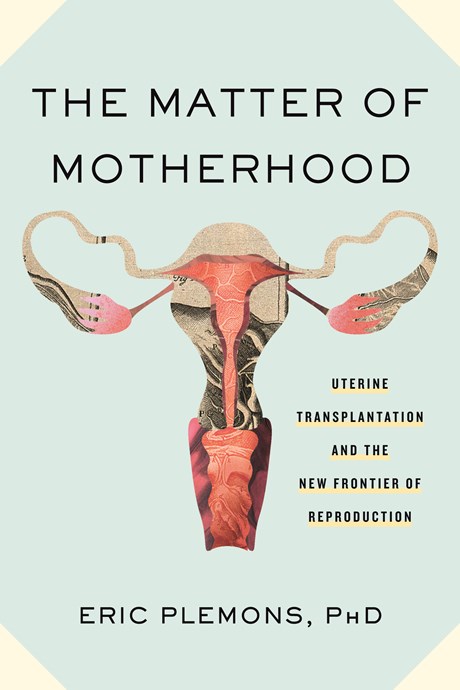
THE MATTER OF MOTHERHOOD
Uterine Transplantation and the New Frontier of Reproduction
Explore the world of the emerging high-stakes and life-changing medical intervention that made the uterus—long synonymous with womanhood and motherhood—sharable
Uterus transplantation is the fastest-growing transplant field in the world. Multiple clinical trials have concluded, scores of healthy babies have been born from transplanted uteri, and research is booming.
The Matter of Motherhood introduces readers to this cutting-edge, “life-enhancing” procedure—one that improves a recipient’s quality of life by restoring capacities that are considered necessary to live well.
Dr. Eric Plemons, the foremost researcher today on uterine transplantation, shares the stories of people who know it intimately:
The women who longed to experience pregnancy but could not without a transplanted uterus
The donors who felt they no longer needed their uterus—an organ doctors describe as “the perfect organ to give away”
The leading surgeons who helped develop the practice through clinical trials
Like any new form of transplant,
Explore the world of the emerging high-stakes and life-changing medical intervention that made the uterus—long synonymous with womanhood and motherhood—sharable
Uterus transplantation is the fastest-growing transplant field in the world. Multiple clinical trials have concluded, scores of healthy babies have been born from transplanted uteri, and research is booming.
The Matter of Motherhood introduces readers to this cutting-edge, “life-enhancing” procedure—one that improves a recipient’s quality of life by restoring capacities that are considered necessary to live well.
Dr. Eric Plemons, the foremost researcher today on uterine transplantation, shares the stories of people who know it intimately:
- The women who longed to experience pregnancy but could not without a transplanted uterus
- The donors who felt they no longer needed their uterus—an organ doctors describe as “the perfect organ to give away”
- The leading surgeons who helped develop the practice through clinical trials
Like any new form of transplant, the procedure provokes expansive debates about justice, health, access, identity, and more. With the uterus, these debates are also entangled with the powerful emotions that accompany conversations around gender, family, motherhood, and reproductive politics.
Throughout The Matter of Motherhood, Dr. Plemons invites us to consider the questions that will arise, such as:
- Who will be qualified to receive a donated uterus?
- Who can be the donors?
- Does this procedure confirm a version of womanhood that requires maternity at all costs?
The experiences Dr. Plemons presents give readers a glimpse of what the future of reproduction can be when the uterus becomes mobile.
- Beacon Press
- Hardcover
- November 2026
- 200 Pages
- 9780807019078
Buy the Book
$28.95

About Eric Plemons
Eric Plemons, PhD, is a medical anthropologist who studies the ways that surgical medicine has helped to define our bodies’ sex and gender. His work has been featured in the New York Times, The Guardian, the New Yorker, TIME, NPR, and more. He is an associate professor of anthropology at the University of Arizona.
Praise
“An enlightening exploration of uterine transplantation… A profound and nuanced portrait of a controversial medical intervention.”—Publishers Weekly, starred review
“This book is a terrific read—engaging, smart, and well-researched. Eric Plemons, a cultural anthropologist, provides readers with a unique lens to appreciate the history, science, and changing societal attitudes of uterine transplants. No other body part has ignited so many questions about gender, parenthood, womanhood, and pregnancy—and what a transportable womb means for the donor, recipient, and potential offspring. Within a gripping narrative, Plemons challenges readers to consider the ethical and societal implications of the future possibilities of baby making. The Matter of Motherhood is a book that matters.”—Randi Epstein, author of Aroused: The History of Hormones and How They Control Just About Everything
“A fascinating exploration of one of the most exciting and contentious frontiers in reproductive technology.”—Leah Hazard, midwife and author of Womb: The Inside Story of Where We All Began
Discussion Questions
1. The book describes uterine transplantation as a “life-enhancing” rather than life-saving procedure because it restores a capacity considered necessary to live well. Do you agree with this classification? How should society prioritize medical funding for life-enhancing vs. life-saving procedures?
2. Given that this is a high-stakes, emerging medical procedure with known risks and costs, how does the book illustrate the challenges of truly informed consent for both recipients and donors?
3. Surgeons in the book describe the uterus as an organ that can easily be given away because it is temporary in its biological function. What did you think about the motivations of the donors featured in Chapter Five? Did anything surprise you about their perspectives?
4. Chapter Two explores the intense, grieving desire of women who cannot carry a child but desperately wish to experience pregnancy. How does Plemons treat this desire? Did the book alter your empathy toward or understanding of people who choose high-stakes surgery over adoption or gestational surrogacy?