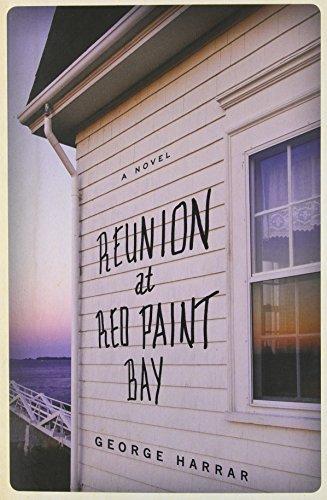
Red Paint calls itself "the friendliest town in Maine," a place where everyone knows one another and nothing too disturbing ever happens. Native son Simon Howe is a sturdy family man–a good father and husband–and owner-editor of the town’s newspaper. Because there’s rarely any real news, he runs stories about Virgin Mary sightings, high school reunions, and petty criminals.
One day Simon’s predictable and peaceful life is disrupted by the arrival of an anonymous postcard, the first in a series of increasingly menacing messages. He tries to ignore them, but the implied danger becomes more real, threatening to engulf his wife and son as well.
read more
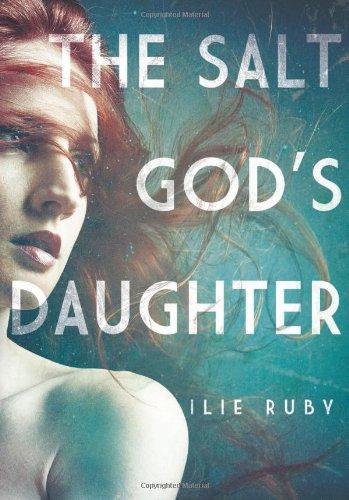
Set in Long Beach, California, beginning in the 1970s, The Salt God’s Daughter follows Ruthie and her older sister Dolly as they struggle for survival in a place governed by an enchanted ocean and exotic folklore. Guided by a mother ruled by magical, elaborately-told stories of the full moons, which she draws from The Old Farmer’s Almanac, the two girls are often homeless, often on their own, fiercely protective of each other, and unaware of how far they have drifted from traditional society as they carve a real life from their imagined stories.
The early death of their mother leads them to the Bethesda Home for Girls,
read more
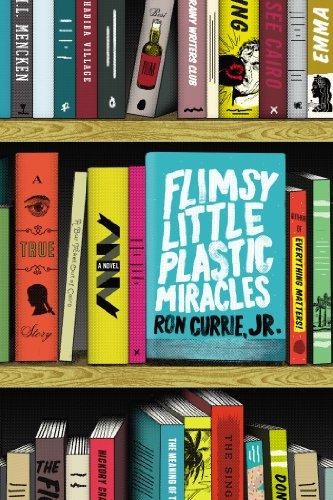
A bold, arresting new work of fiction from the acclaimed author of Everything Matters!
In this tour de force of imagination, Ron Currie asks why literal veracity means more to us than deeper truths, creating yet again a genre-bending novel that will at once dazzle, move, and provoke.
The protagonist of Ron Currie, Jr.’s new novel has a problem—or rather, several of them. He’s a writer whose latest book was destroyed in a fire. He’s mourning the death of his father, and has been in love with the same woman since grade school,
read more
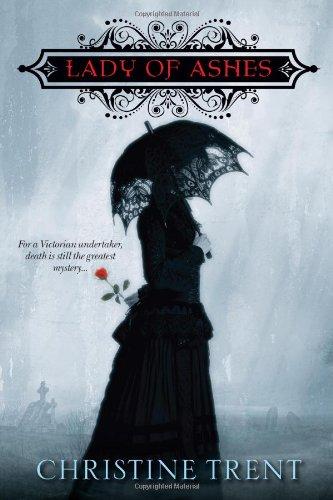
Only a woman with an iron backbone could succeed as an undertaker in Victorian London, but Violet Morgan takes great pride in her trade. While her husband, Graham, is preoccupied with elevating their station in society, Violet is cultivating a sterling reputation for Morgan Undertaking. She is empathetic, well-versed in funeral fashions, and comfortable with death’s role in life—until its chilling rattle comes knocking on her own front door.
Violet’s peculiar but happy life soon begins to unravel as Graham becomes obsessed with his own demons and all but abandons her as he plans a vengeful scheme. And the solace she’s always found in her work evaporates like a departing soul when she suspects that some of the deceased she’s dressed have been murdered.
read more
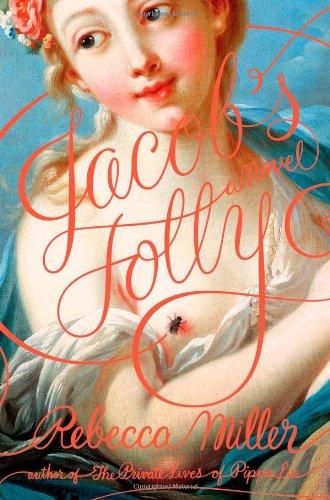
A luminous novel—funny and moving in equal measure—that shines with the author’s unique talents
Jacob’s Folly is a rollicking, ingenious, saucy book, brimful of sparkling, unexpected characters, that takes on desire, faith, love, acting—and reincarnation.
In eighteenth-century Paris, Jacob Cerf is a Jew, a peddler of knives, saltcellars, and snuffboxes. Despite a disastrous teenage marriage, he is determined to raise himself up in life, by whatever means he can. More than two hundred years later, Jacob is amazed to find himself reincarnated as a fly in the Long Island suburbs of twenty-first-century America,
read more
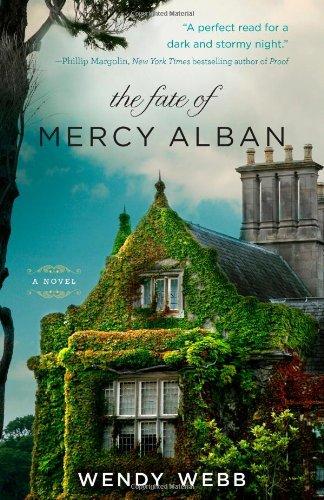
Grace Alban has spent more than twenty years avoiding her childhood home, the stately Alban House on the shores of Lake Superior, for reasons she would rather forget. But when her mother’s unexpected death brings Grace and her teenage daughter back, she finds more is haunting the halls and passageways of Alban House than her own personal demons.
Long-buried family secrets, a packet of old love letters, and a lost manuscript plunge Grace into a decades-old mystery about a scandalous party at Alban House, when a world-famous author took his own life and Grace’s aunt disappeared without a trace.
read more