A biologist reveals the secret world hidden in a single square meter of forest
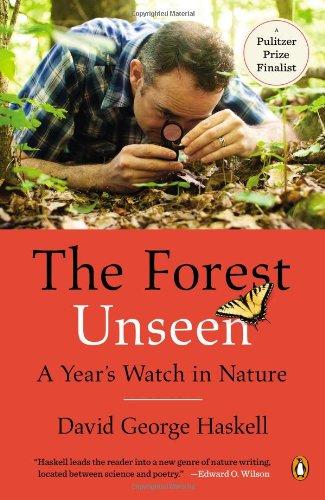
Written with remarkable grace and empathy, The Forest Unseen is a grand tour of nature in all its profundity. Biologist David George Haskell uses a one-square-meter patch of old-growth Tennessee forest as a window onto the entire natural world. Visiting it almost daily for one year to trace nature’s path through the seasons, he brings the forest and its inhabitants to vivid life. Beginning with simple observations—a salamander scuttling across the leaf litter, the first blossom of spring wildflowers—Haskell spins a brilliant web of biology,
read more
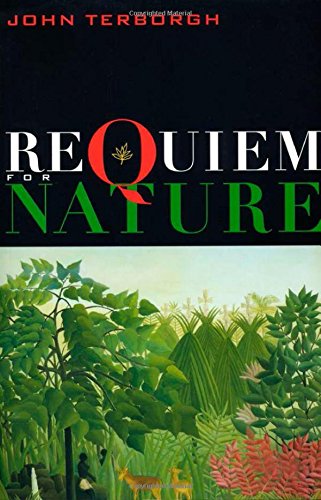
For ecologist John Terborgh, Manu National Park in the rainforest of Peru is a second home; he has spent half of each of the past twenty-five years there conducting research. Like all parks, Manu is assumed to provide inviolate protection to nature. Yet even there, in one of the most remote corners of the planet, Terborgh has been witness to the relentless onslaught of civilization.
Seeing the steady destruction of irreplaceable habitat has been a startling and disturbing experience for Terborgh, one that has raised urgent questions: Is enough being done to protect nature? Are current conservation efforts succeeding?
read more
Valuing the Earth collects more than twenty classic and recent essays that broaden economic thinking by setting the economy in its proper ecological and ethical context. They vividly demonstrate that, contrary to current macroeconomic preoccupations, continued growth on a planet of finite resources cannot be physically or economically sustained and is morally undesirable. Among the issues addressed are population growth, resource use, pollution, theology (east and west), energy, and economic growth. Their common theme is the notion, popular with classical economists from Malthus to Mill, that an economic stationary state is more healthful to life on earth than unlimited growth.
read more
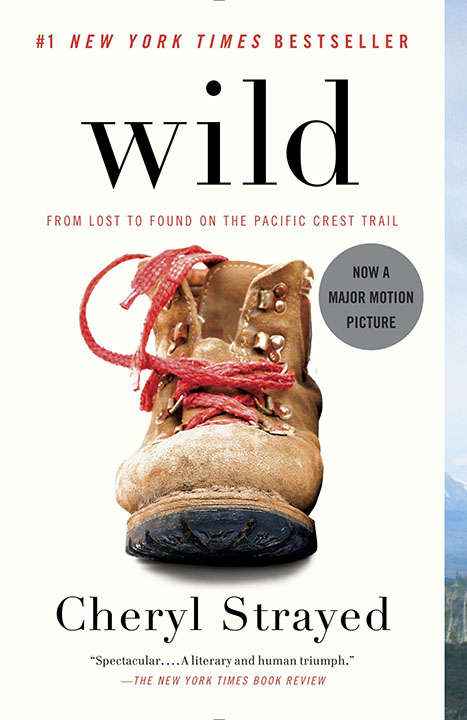
At twenty-two, Cheryl Strayed thought she had lost everything. In the wake of her mother’s death, her family scattered and her own marriage was soon destroyed. Four years later, with nothing more to lose, she made the most impulsive decision of her life: to hike the Pacific Crest Trail from the Mojave Desert through California and Oregon to Washington State—and to do it alone. She had no experience as a long-distance hiker, and the trail was little more than “an idea, vague and outlandish and full of promise.” But it was a promise of piecing back together a life that had come undone.
read more
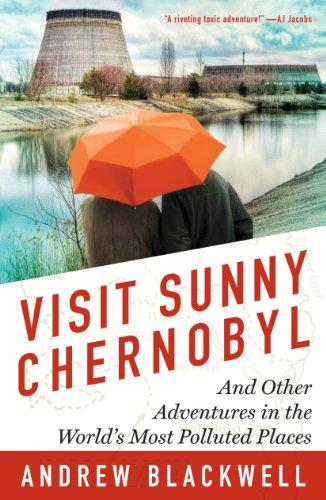
For most of us, traveling means visiting the most beautiful places on Earth—Paris, the Taj Mahal, the Grand Canyon. It’s rare to book a plane ticket to visit the lifeless moonscape of Canada’s oil sand strip mines, or to set sail for the Great Pacific Garbage Patch. But in Visit Sunny Chernobyl, Andrew Blackwell embraces a different kind of travel, taking a jaunt through the most gruesomely polluted places on Earth.
Visit Sunny Chernobyl fuses immersive first-person reporting with satire and analysis, making the case that it’s time to start appreciating our planet as-is—not as we wish it to be.
read more
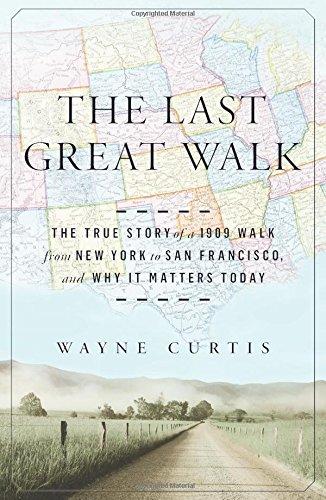
In 1909, Edward Payson Weston walked from New York to San Francisco, covering around 40 miles a day and greeted by wildly cheering audiences in every city.The New York Times called it the “first bona-fide walk . . . across the American continent,” and eagerly chronicled a journey in which Weston was beset by fatigue, mosquitos, vicious headwinds, and brutal heat. He was 70 years old.
Using the framework of Weston’s fascinating and surprising story, journalist Wayne Curtis investigates exactly what we lost when we turned away from foot travel, and what we could potentially regain with America’s new embrace of pedestrianism.
read more